
Identify a Bell County Owner
Treat a Bell County owner search as a chain of evidence. The qPublic search takes a name, a location address, a parcel ID, an alternate ID, or something broad. Start with the street address when you have it. Copy the parcel number and the Owner line exactly, punctuation and all. Do this especially for a business name. Then carry the deed book and page over to the Bell County Clerk's record system. That last step is what settles the question. The PVA card is tax data, but the deed proves the conveyance itself.
- Enter the street number and road in qPublic, then try route and road-name variants if the first query fails.
- Open the best parcel match. Save the Owner, parcel number, location address, tax district, and deed book/page.
- Use the book/page and owner name with the Bell County Clerk record route to inspect the latest deed.
- Compare the deed's grantee, meaning the party receiving the interest, with the PVA Owner field before identifying the property owner.
This method shows who owns the parcel on the public record. It says nothing about who lives there. A tax bill can go to another address entirely, and someone standing on the lot may hold no ownership interest at all.
Bell County's PVA Owner Lead
On the PVA parcel card, the tax-roll owner appears in a field marked Owner. That field sits beside a Mailing Address and away from the Location Address. That spacing guards against a common mistake. Where a tax bill goes is not always the property site or the owner's home. The card also lists the parcel and account numbers, class, tax district, and an abbreviated description. Deed book and page, value figures, any exemption, and sales data appear there too.
Keep one caution in mind. The public card can shift before the next certified roll. Its upload stamp tells you when the data set entered the system, not when every deed was caught up. Use the Owner field to spot the likely current name. Then trace that name to the recorded deed for proof.
- Owner of record
- The name carried on the public tax roll or recorded title source.
- Situs address
- The parcel's location address, distinct from a tax-mail destination.
- Grantee
- The person or entity receiving an interest in a deed.
- Title
- The legal ownership interest, which a tax card alone does not prove.
Trace Bell Ownership to Deeds
A deed book and page on qPublic is your bridge from tax-roll identity to recorded proof. That entry becomes your anchor in the recorded proof. Bell's Clerk records deeds, corrections, easements, releases, mortgages, plats, restrictions, wills, and affidavits of descent. The private-citizen eCCLIX route is described as free for Bell County. It is capped at five searches per day. Bell's own start year is not published. So an empty web result never proves a record is missing.
Search the name as grantee and as grantor when the first hit is murky. A correction can fix a legal description without creating a new conveyance. A will or an affidavit of descent may explain an estate transfer. If the portal stalls, visit the Deed Room. You can also send a narrow written request if the deed is old. The Clerk accepts hand delivery, mail, fax, or email. Kentucky's Open Records Act requires a written response within five working days.
Bell Owner Card Search Screen
The official qPublic search interface is the address-to-owner starting point documented for Bell County.
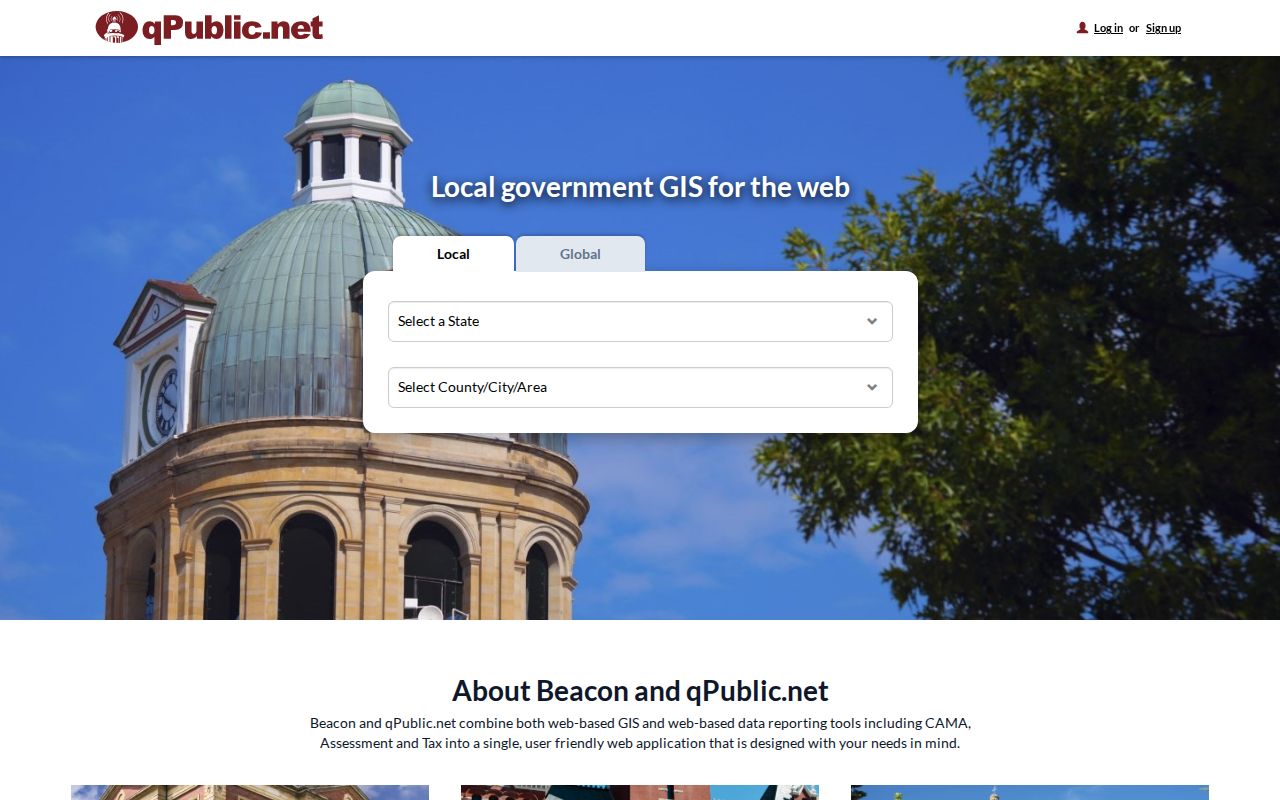
The search screen covers the first leg of the ownership method. From there, the parcel report plus the latest deed supply the evidence that confirms the name.
Bell County Ownership Sources
No single field settles every ownership question. The tax roll, the deed index, and the parcel map each do a different job, and a state business filing can decode an entity name. Read them in order.
| Where ownership appears | What it contributes | Freshness or limit |
|---|---|---|
| Bell PVA tax roll | Owner, mailing address, situs, parcel ID, and deed reference | Latest working or certified roll; a sale may not appear at once |
| Bell County Clerk deed index | Grantee, grantor, instrument, recording sequence, and conveyance terms | The latest recorded instrument is the key confirmation layer |
| qPublic parcel map | Tax parcel selected by place, with a linked owner report | Map lines are not official boundaries |
| Kentucky Secretary of State | Entity filings, agent, principal office, and listed managers or officers | Does not disclose every trust or beneficial interest |
An owner string may name an individual, a couple, an estate, a trust, a company, a public body, or a representative. The recorded deed shows the capacity in which that party took title. A Secretary of State filing helps interpret a company, but it cannot replace the deed.
Decode Bell Entity Owners
When qPublic lists an LLC or corporation, copy the legal name letter for letter. Run that exact string through the Kentucky business entity search. Filings there may show a registered agent, principal office, officers or managers, and filed documents. Those facts can help route a property inquiry. Still, an agent's address is not the parcel address. Likewise, an officer is not automatically the property owner.
Trusts and estates take a different route. Read the deed for trustee or representative language. Then work through later deeds, affidavits of descent, wills, corrections, and releases. The party named on a document matters only together with that party's legal role.
Note: Search name variants and suffixes as you go. Preserve the exact indexed form in every saved record reference.
Recent Bell Property Transfers
A Bell sample qPublic report showed separate working and certified value years. It also carried a last-upload timestamp. Those fields reveal how old the tax data is. They do not promise an instant owner update after closing. Vendor guidance also notes that verified CCLIX images may appear in eCCLIX the next day. Neither source guarantees a local deed-to-PVA interval.
For a recent sale, compare the dates. The Clerk's newest recorded deed may postdate the tax roll. It may also name a different grantee. If so, keep both records with their dates. The newer deed is the stronger evidence of the current transfer. The focused Bell County current-owner check walks through that present-tense comparison in more detail.
Trace Bell Address Variants
Watch the address before anything else. Bell records may spell one road several ways. It can appear as a highway, a route number, or a plain road name, and a creek name can hold the best location clue. Start with the exact street number. Then test common road abbreviations. Test route forms too, and the postal city printed on the parcel card. Keep the query that produced each candidate rather than blending results together.
Bell's postal labels reach past Pineville and Middlesboro with rural names. A ZIP or postal city settles nothing about municipal limits, tax district, or ownership. The PVA card lists the Location Address, parcel ID, and tax district as separate facts. So when one address returns several parcels, compare all three. Lean on deed book and page to stay on the right land.
The PVA change-of-address form asks for the property's 911 address. It also wants the city, map number, and a new tax-bill address. That local form makes the same point plainer: situs and mailing facts do different jobs. Neither one alone answers who occupies the parcel.
Use Bell Ownership Fallbacks
Portal access is not the only channel. The Clerk's Pineville Deed Room is another. So is the Middlesboro service office. Bring the parcel ID, current owner name, a road or creek clue, an approximate date, and deed book and page. From there the Clerk can direct a search across deed, correction, plat, will, affidavit, restriction, mortgage, and release categories. Call before a weekend visit, since the Clerk's pages carry different Saturday statements.
A narrow open-records request is another path. It works when the needed nonexempt record is not online. Bell policy accepts hand delivery, mail, fax, or email. State whether inspection, an electronic copy, or a certified copy is sought, and ask for a fee estimate. The statutory five-working-day rule governs only the written response.
Limits of Bell Owner Records
A parcel card answers a tax-roll question. It does not prove who lives there. Nor does it resolve competing title claims or locate a boundary on the ground. A deed index is still just an index. The instrument has to be read, because mortgages, liens, releases, easements, probate orders, or a pending court case can change the picture.
Kentucky Safe at Home offers a substitute address for eligible survivors. The state's own guidance says real-estate holdings are exempt and may remain public, so a recorded parcel will not vanish from county property records. Use only the facts needed. Corrections go to the PVA or Clerk.
Ownership is not title proof. A Bell County owner name is a lead, not a title search. An LLC, trust, estate, or later deed may change the result. Use public data only for lawful diligence, and never to harass or target a person.