
Bell County's Owner Record Card
The Bell County PVA parcel report offers a present-tense view of ownership. Its label reads Owner. The name alone is not the whole answer. Read it beside the card's identity, place, and deed clues, since the report puts the parcel number, account, tax district, deed book and page, value years, exemption, and sales history in one place. The owner name appears in uppercase. The mailing destination stays separate from the property's location address.
| Owner | The name carried on the current tax roll |
|---|---|
| Mailing Address | The destination for tax mail, not proof of residence |
| Location Address | The parcel's situs or physical-place label |
| Parcel / Account | The identifiers that keep the correct property in view |
| Deed Book/Page | The cross-reference to the recorded conveyance |
| Sales | Date, price, grantor, grantee, book, and page when populated |
Who does the PVA carry as owner today? The Owner field is the best first answer. It does not prove who occupies the land. Nor does it guarantee the roll has absorbed a deed recorded after the last update. Check the working or certified year before making any current-owner claim.
Inspect Bell's Current Owner Search
The qPublic search interface provides Bell County's documented path to the parcel report.
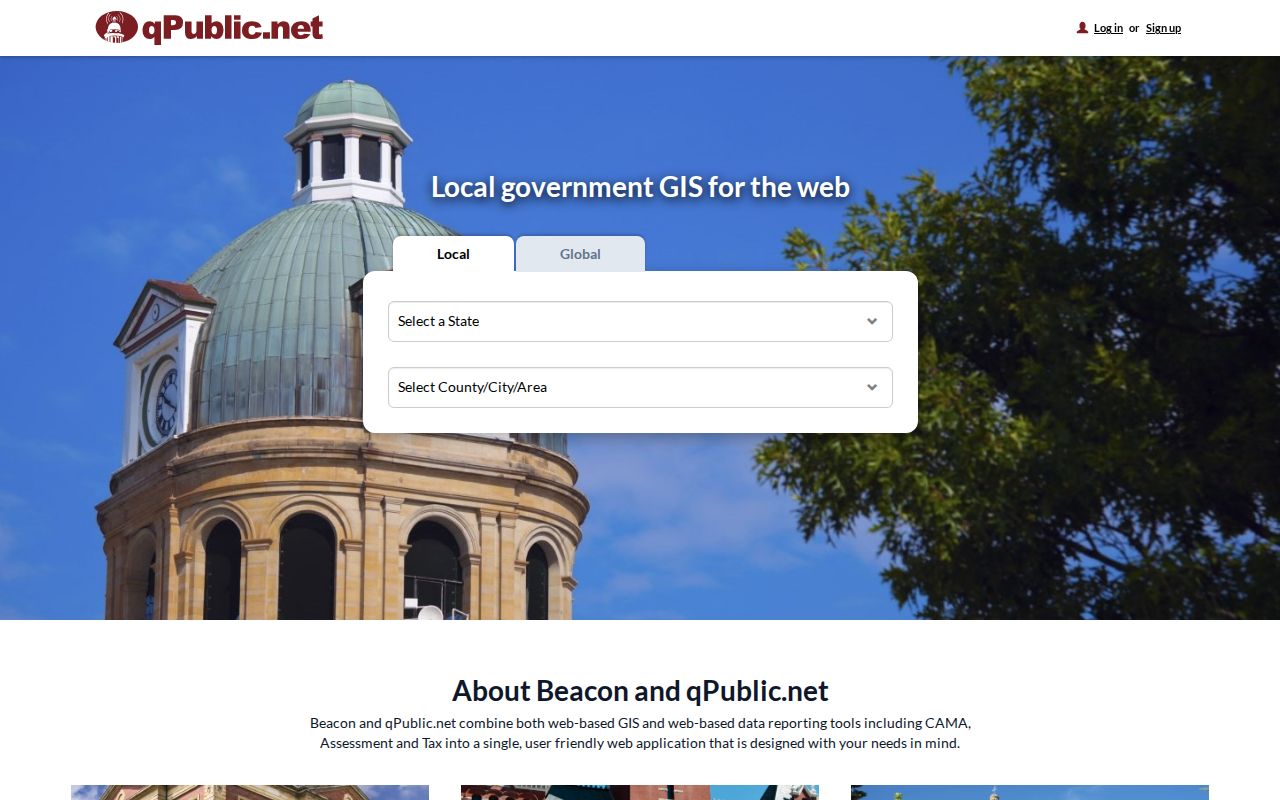
The search screen is where the work begins. Open the parcel report, transcribe the Owner field, and then compare that name with the newest deed.
Separate Bell Owner Addresses
The Bell County card keeps three facts apart: the Owner, the Location Address, and the Mailing Address. The PVA's change-of-address form confirms the distinction by asking for the property's 911 address, the map number, and a new tax-bill address. An owner may get mail somewhere else. A company may list an office. An estate may use a representative's address.
Rural labels add another layer. A Pineville or Middlesboro postal label does not settle city limits or occupancy, so route names, creeks, ZIPs, and tax districts should stay as distinct facts.
- Owner of record
- The name presently carried by the roll.
- Assessment roll
- The PVA tax record for parcel identity and value.
- Situs
- The location label for the parcel itself.
- Recording lag
- The period when a newer deed may not yet appear on the roll.
Check Bell Owner Freshness
Timing matters on the parcel report. The sample card showed a 2026 Working Value, a 2025 Certified Value, and a last-upload stamp from March 2026, and those fields reveal the tax data's timing. They do not promise a fixed number of days between recording and an Owner-field change. Bell County publishes no precise local lag. If the Clerk's latest deed postdates the tax roll and names another grantee, keep both records with their dates. The deed is stronger evidence of the newer transfer. Never silently "correct" the tax card in saved notes.
Recent-sale check. The Bell County roll can lag a sale. A newer recorded deed naming a different grantee is the more current transfer evidence.
Confirm Bell's Current Owner
The Bell County Clerk records the deed that places a grantee in the chain of title. Start with the card's deed book and page. Then test whether any later transfer was recorded. The private eCCLIX route is described as free for Bell County. It allows five citizen searches per day. No online start year is published. A missing web result points to the Deed Room or a written request.
- Find the parcel by location address and save its current Owner, parcel ID, and deed reference.
- Note the working or certified year and last-upload stamp shown on the card.
- Search the deed book/page and owner name through the Clerk's recorded-instrument route.
- Check for a later deed, correction, affidavit of descent, or transfer.
- Confirm that the newest grantee and legal description point to the same Bell parcel.
- Grantee
- The party receiving the interest conveyed by a deed.
- Vesting
- The form and capacity in which a party holds title.
- Registered agent
- A business filing contact, not proof of personal ownership.
Read Bell Entity Owners
An owner of record can be an LLC, corporation, trust, estate, public body, or representative. Keep words like "LLC," "Trustee," "Estate of," or "Heirs of" intact when searching. The capacity shown on the deed matters as much as the name itself.
The Kentucky business search can surface entity filings, a principal office, and a registered agent. It does not reveal every beneficial owner, trustee, or general partner. The deed remains the link between the entity and the Bell County land.
Search the entity exactly as indexed, punctuation and legal ending included. Compare its filing status and last annual report date against the deed date. A registered-agent or principal-office address is an organizational clue. It is not the parcel's location. It does not prove a listed manager owns the land personally.
Resolve a Blank Bell Owner
A blank field does not prove the fact is absent. Search by the full parcel ID and account number. Preserve every leading zero, hyphen, and decimal. Try road and route variants too. If the report stays incomplete, give the PVA the parcel and location clues you have.
Save the exact query and the zero-result screen. A narrow request under Kentucky's Open Records Act can reach nonexempt records. Use it when the portal fails. Bell County Clerk policy accepts hand delivery, mail, fax, or email. It separates an index search from a certified copy.
Write the request to identify the parcel, location, deed book and page. Add the date range and record type. State whether inspection, an electronic copy, or a certified copy is needed. Ask for a fee estimate. A narrow question lets the custodian answer without pulling unrelated records.
Read Bell's Latest Deed Signals
A recorded Bell County deed holds clues the tax roll compresses. Check the execution and recording dates first. Then read the grantor, grantee, legal description, consideration statement, source of title, return address, and tax-bill care-of address. Bell County's current deed requirements are strict. Both parties must appear with mailing addresses, along with a legal description, source of title, preparation statement, return address, acknowledged signatures, and consideration details.
One caution deserves weight. A mortgage, release, easement, or restriction is not a transfer of ownership. A correction deed fixes a description, not the parties. An affidavit of descent can map an heirship route, but read the instrument type and what it actually conveys before replacing the owner shown on the PVA card.
A recent sale may also appear in the card's Sales section. The entry shows grantor, grantee, date, price, book/page. Use it as a cross-reference. A $0 price on a Bell County sale entry shows why the transaction field cannot stand in for the full deed record.
Confirm Bell Owners Offline
Sometimes eCCLIX or qPublic will not answer the question. Bring the parcel clues to the right custodian. The PVA keeps the tax-card display, while the County Clerk holds the recorded instrument and index. A written request can seek nonexempt records by parcel, book/page, document type, party, and date range.
Certified deed copies cost extra. Bell County's deed page lists a certified deed copy at $5, while other recording and copy charges differ. Verify the current total with the Clerk. A certified copy proves what the Clerk recorded; it does not by itself resolve a contested title.
Keep the receipt, response date, fee quote, and certification.
Use Bell Owner Data Lawfully
A good-faith letter about a purchase, easement, deed issue, or shared boundary can rest on the tax roll's mailing address. Do not call it the owner's home without proof. Keep any contact tied to the parcel and leave unrelated personal details alone. Kentucky Safe at Home offers eligible participants a substitute address. State guidance treats real-estate holdings as exempt, and they may remain public. Public access never authorizes harassment.
Lawful use. Bell County current-owner data is for legitimate property diligence. Never use a public name or address to stalk, harass, intimidate, or harm anyone.